Showing posts with label bad habits. Show all posts

Monday, 21 May 2018

An Actor’s Mindset: How Improv Has Changed My Life
An Actor’s Mindset: How Improv Has Changed My Life

actor's mindset
I was never an outgoing kid. A series of unfortunate events during my high school years, whose perpetrators undoubtedly know of my longlasting distress, left me emotionally crippled. I was shy to the point of becoming unable even to talk to friends without getting overwhelmed by anxiety. My self-esteem was dangerously low, and I found that living day-to-day became a Herculean struggle. As far as I was concerned, everything that went wrong was my fault; everything that went right did so in spite of own failings. And my failings were plenty. I felt ugly. Disgusting. Stained, inside and out. Crazy. Worst of all, unlovable. Anyone who has ever felt such emotional pain and despair understands what it’s like to live through these kinds of feelings. “Living” might be too optimistic of a word, in fact. One begins to feel like the walking manifestation of death itself.
Oddly enough, I did have a hobby that consistently brought joy to my life, and it was the last hobby anybody, including myself, would have expected from somebody like me. I was an actor. I discovered my passion late into middle school, and carried it with me throughout all of my suffering in high school. I established myself as (and I say so not to be pompous, but because it was often told to me) one of the most talented actors in the 300-some population of the school. I started with side characters, and people told me I stole the shows. I ascended to lead roles and consistently began to win awards from the school’s theatre program. Judges from the annual Illinois State Theatre Festival even selected a production in which I was a lead to be performed in front of hundreds, if not thousands, of students from across the state. When I walked on stage, people noticed and paid attention. I took command of each and every role I was given, and pulled them off with a skill that never failed to impress. One would expect, after seeing me onstage, that I would be among the most outgoing, confident individuals in the community. And yet, inside, I was broken. I frequently overheard conversations between my directors regarding the amazing dichotomy between my stage self and my “real” self, although I always hesitated to apply such a label to the dysfunctional mess that I had become.
My passion for acting, and my ever-wavering spirits, followed me into college. To my dismay, lead roles in the theatre program of Illinois State University were mostly reserved for theatre majors. After having become accustomed to lead roles, I became rather disenchanted and set acting to the backburner for good.
The consequences followed immediately. Another series of events landed me briefly in a nearby hospital. I plummeted to the worst condition I could have imagined. Soon after my discharge, though, a loose acquaintance of mine offhandedly mentioned that an improv troupe would be holding auditions. With less than two days to prepare, I resigned myself to the reality that no matter how good of an actor I was, there was no possible way I was talented enough to join “the big leagues.” College-level acting, no less than the notoriously difficult art of improvisational acting, was out of my reach. And yet I never truly gave up, for I allowed myself to hope just enough to bother attending the audition.
There was stiff competition, of course, and the senior members performed incredibly as they demonstrated what we would do during the audition. As far as I was concerned, I had already failed. But when I stepped onstage, the switch flipped. I returned to my element, nailed the audition, moved on to callbacks, and nailed them too. As abruptly as I had even decided to interest myself with the team, I was a member.
The team had existed for almost twenty years, having been formed slightly before my birth. Its name was Improv Mafia, and the senior members informed me (proudly, though not arrogantly) that they were a rather big deal in the world of collegiate improv. I was shown a stunning collection of plaques and trophies. Regional champions, national champions. They had alumni all over the country, nailing roles in professional improv troupes. In short, I had stumbled upon a group that had a decorated history, a group that had good reason to be unimaginably selective.
The other members’ reaction to my selection, and the selection of the other three newcomers, was quite unlike what I had expected. I had never experienced such a sheer outpouring of love, acceptance, and enthusiasm from people whose names I hadn’t even learned yet. As luck would have it, this love would never waver, even as I struggled to love myself.
The Mafia held to a rigorous schedule: practice five hours per week, plus a two-hour show every Tuesday. We never charged any money for attendance; we performed because we had a passion for the art, because we took it seriously. We took the ridiculous seriously, as went our motto. Naturally, you begin to form bonds with people you spend so much time with, and each person begins to spread a bit of their likeness to everyone else. During the countless hours of time with the Mafia, I absorbed many lessons and philosophies. I firmly believe that these philosophies can be applied to anyone’s life and, as with mine, provide a seemingly infinite source of self-improvement.
I say this because my life has improved immeasurably in these short few months. My self-esteem is higher than it has been in almost five years. I have newfound confidence in myself. My day-to-day life, while still pelted with occasional hiccups, is far less treacherous, all because of Improv Mafia. While it would be impossible to articulate every lesson this group has taught me, they can be distilled in such a way as to provide aid to those in need, or to simply improve a life that is already atop the waves of contentment.
Firstly, have confidence in your own decisions. When the Mafia performs, we try to avoid “being in our heads.” This means we make decisions about how our acted scene will evolve, and we fully commit to them. Nothing destroys a scene more quickly than pausing to doubt yourself. It breaks your immersion from the scene and makes it difficult to recover. Think of a movie or video game that you just couldn’t “get into,” and you’ll get a good idea of what we try to avoid while acting. Similarly, my life outside of acting improved significantly when I stopped doubting each and every decision that I made. I used to doubt every move I took, every word I spoke, and every friendship I made. As it stands now, I have the confidence necessary to commit to myself and trust that I not only have my best interests in mind, but also the ability to follow through and execute them. The difference is quite indescribable. In years past, most of my free time would be spent worrying about the state of my friendships, wondering if I had done something to harm them. Since Mafia, my mind has become much clearer, my life has become less stressful, and I can dedicate my time and mental exertion to more productive tasks.
This self-improvement comes not only to my benefit, but to the benefit of my loved ones as well. I concern myself greatly with the well-being of my friends, and I do all that I can help them in all matters, big and small. However, my capacity to help them was limited by my capacity to help myself. Nobody feels comfortable unloading their problems onto an individual already burdened with so many problems of their own. Slowly, people have begun to recognize my personal progress, and I have faith that they will trust me more to help them when problems in their lives arise. Within the improv sphere, a general guideline is to help yourself before helping your partner. That is, establish your own character and background before attempting to establish those of the person with whom you are performing. Good scenes don’t occur when both actors are so afraid to step on each other’s toes that they refuse to assert themselves.
Generally speaking, you also can’t refuse to accept scenarios that your fellow actor puts forward. If your partner remarks that the scene is taking place within a grocery store, the appropriate response is to affirm this new reality and add to it. To contradict your partner is to confuse them, deny them, and imply that their attempt at establishing the scene wasn’t good enough for you. In my daily life, affirmation is an important coping mechanism. I’ve always known that I cannot change everything in my life, but Mafia taught me to accept this and to affirm reality as it is. The serenity prayer, essentially, applied to everyday life. You make better scenes when you affirm, and your life is smoother when you affirm the cards you are dealt. This isn’t to say that you shouldn’t attempt to improve yourself and better your situation; it means that such attempts shouldn’t be the determining factor of your happiness. Conventional wisdom tells us that we can never be satisfied if we think, “I’ll be happy when I get this, or when I achieve that.” You need to find satisfaction in the moment, regardless of circumstance, just like you need to find motivation to accept your partner’s reality when you act improvisationally.
Perhaps the most basic, foundational lesson I’ve learned is that it is always wise to hope. Even when I was at my lowest, I allowed myself a glimmer of hope, and now my life is better than it has practically ever been. I understand what it feels like to be hopeless, and to live day-by-day feeling that I can’t get any lower. But if I gave in to that despair, I never would have met the people who are now some of my closest friends. If you struggle to look forward to tomorrow, allow yourself one more day. If you have the strength, give yourself that glimmer, and give yourself time to see where it goes. What results may just surprise you.

Monday, 14 May 2018

How I Overcame Fear and Found My Love of Teaching, Travel and Chopsticks

How I Overcame Fear and Found My Love of Teaching, Travel and Chopsticks

fear
“Too many of us are not living our dreams because we are living our fears.” – Les Brown
A few years ago I received a terrifying email.
“We are pleased to inform you that you have been awarded a Fulbright scholarship to South Korea…”
Perhaps I should back up a bit. I was in my senior year in college, and had no idea what I wanted to pursue after graduation.
I did know that I wanted to think big. I wanted to see the world, to do exciting things, to have a life worth sharing.
It was a new concept among my circle of influence. Most of the people I knew at that time were either settling into regular jobs or about to get married. Very few individuals from the town I grew up in had ever even left the state. No one I knew had been to Asia.
“College is the best time of your life,” the adults in my life told me over and over again. “Take advantage of your freedom while you still have it.”
So I did.
I applied, mostly on a whim, to the Fulbright scholarship in South Korea.
I had never been to Asia and wanted to study an Asian language, and Korean was less intimidating than Chinese or Japanese or Khmer, the language of Cambodia. That was about the extent of the thought process that went into my decision as to where I would apply.
I never thought I’d be accepted, though.
And when I was, I was so scared, I almost didn’t go.
In the end, though, I finally decided that Fulbright was just too good an opportunity to pass up, no matter how scared I was.
My year in South Korea was hands down the hardest year of my life. It was also my most rewarding year. I made friendships to last a lifetime. I found an internal strength I never knew existed. I developed a vastly different view of the world than I had had before I left.
Sometimes I imagine how different my life would be if I hadn’t applied to Fulbright – or worse, if I had been awarded a spot, but had turned it down out of fear of the unknown.
I would never have found my love of teaching, or eating with chopsticks, or Korean fried chicken, or patbingsu, a korean dessert made mostly of red bean paste and shaved ice. I would never have met the precious students whose eager attitudes and sweet spirits made my job such a joy to wake up to every morning. I would never have seen fabulous cultural exhibitions like the lantern, mask dance or ice festivals. I would never have become confident in my ability to handle solo traveling by touring all over southeast Asia during my winter break. I would never have experienced the Taj Mahal, Angkor Wat, the Golden Palace in Japan, or the DMZ border between North and South Korea.
My life would be so different if I had let myself be governed by my fear. Graduate, get a job, get married, settle down. The classic American story. There is nothing wrong with this story, mind you. But there is also no requirement that we all follow this pattern.
One of the top regrets of the dying is “I wish I’d had the courage to live a life true to myself, not the life others expected of me.”
Korea taught me that, if there is something you want to attempt, you should do everything you can to go for it.
Korea taught me that you should do things that scare you.
The challenges you are imagining are probably not as insurmountable as you may think they are, and the rewards are likely far more numerous than you could ever dream.
Life is not about doing everything perfectly. It’s not about living the life that people expect of you.
Life is about living to the fullest degree that you can.
Don’t let fear – of the unknown, of your own abilities, of what people will think – be the deciding factor of your life.
What scary decisions have you been considering lately? What can you do today to take a step toward pushing through your fear?

Thursday, 10 May 2018

Tony Robbins: Feeling Lost? How to Find Yourself Again ( Tony Robbins Pa...


Are you feeling lost?

6 Ways to Give Yourself a Mid-Year Boost

6 Ways to Give Yourself a Mid-Year Boost

mid-year boost
“What you resist, persists” – Carl G. Jung
Mid-year is the time of the year I find myself needing a boost.  In the beginning of the year, we’re still buzzing with energy from our holidays and ready to get to conquering the year.  Towards the end of the year, you realize you only have so much time left to get yourself into gear before the holidays roll around again and we start fresh with a new year.  That leaves us with mid-year equidistant from both the January-New-Year motivation and the OMG-it’s-almost-December shock.
The mid-year slump hits me hard creatively.  I set out at the beginning of the year with big plans for my blog and a full editorial calendar.  My ideas flow easily and the motivation to get to work is there.  But as the month’s pass, I slide down into a rut.  The ideas dry up a bit and my drive slows to snails’ pace.  I’m no longer so sure about all the things I had planned and believed in.  Self-doubt sets in.
It’s not the best of feelings.  But in my experience, it’s best to go with it and honor these low energy times.  Embrace your ups and downs and make the most of both.
You might find this is the perfect time for you to re-evaluate all that you’ve been working on since January.  Revisit the goals you set at the beginning of the year and decide if the strategy you set out to achieve those goals is really working for you.  It could also be time to take a small break from what you’ve been up to and try some new stuff.  That can be very invigorating and will definitely help you get your groove back.  Take your low energy stints as a time for you to relax and recoup, to gather your thoughts, and to get back on track or set forth in a new direction.
If like me, you need a bit of a boost mid-year there are a couple of ways you can make the most of this time without fighting it.

Shake Up Your Routine

If you always drink coffee in the morning with a slice of toast and walk to work the same route, bust out of that routine and try something new.  Drink tea and have some fruit for breakfast.  Eat at different places, cook new recipes, try new ingredients.  Walk to work on a different route or ride a bike instead.  Whatever comfortable habits you’ve created all year long shake them up with alternatives.  You don’t have to give anything up permanently just try out a new daily routine.

Try A Different Exercise Regimen

Whatever your current exercise regimen is try something different.  If you’ve been doing hardcore cross-fit try something lighter like yoga or walking.  And vice versa, if you’ve been doing a lighter exercise like yoga, try a box fit class or karate.  As I said before, you’re not looking to make permanent changes here.  You can go back to or keep doing whatever you’ve been doing to date just throw in something completely different to juxtapose your normal exercise regimen.

Change Up Your Reading

If you’ve been reading mostly from a certain genre, topic or viewpoint try something totally different for a while.  This is a great way to get the juices flowing and find some new inspiration.  Read what you wouldn’t normally read, bring out those long and/or difficult reads you’ve put off for so long.  Read the opposite viewpoint of what you would normally read.  Challenge yourself to new reading through different topics and authors.

Go Somewhere New

Pack a weekend bag and hit the road to spend some time somewhere local you’ve not been before.  If you have the means and the time, travel somewhere more distant you’ve always wanted to go.  Keeping it local has its advantages, though.  You’ll get to experience something new close to home and connect with new people who are in your community or geographic vicinity.  Get a refreshed perception of what’s around you and those living there.  You may find renewed inspiration and joy for where you are.

Get Creative

If you have a creative hobby like photography or painting, go out and do more of that.  Also, try new creative hobbies.  If you don’t have one, now is the time to find one.  Creative hobbies are important breaks from your normal grind and give you the freedom to think and express yourself in different ways.  It can be as simple as drawing instead of writing.  The important thing here is that you do something creative, you don’t have to be good at it.

Do Nothing

Yip, do nothing.  Sometimes that’s just what you need.  Don’t feel guilty for spending a bit of time doing nothing.  Go into the garden and just sit.  Go where you feel comfortable and just be.  I’m not suggesting you use the time to allow your mind to run amuck working you up into an anxious mess – none of that.  Just be, don’t think about the past or the future.  Just enjoy this moment of peace doing nothing.
Try one or all of these.  It’s completely up to you.  Whatever you do, though, don’t be disheartened by times of low energy.  Be gentle with yourself and don’t feel bad for taking the time you need to get back some of that joie de vivre.  Life is cyclical – there are ups and downs.  It’s what you do with those times that makes all the difference.
How do you give yourself a boost when you feel less motivated?

Sunday, 6 May 2018

Tony Robbins - What they dont teach you about FEAR


Do you have fear and still act?

A Ballerina’s Story: How I Learned to Love My Body

A Ballerina’s Story: How I Learned to Love My Body

ballerina
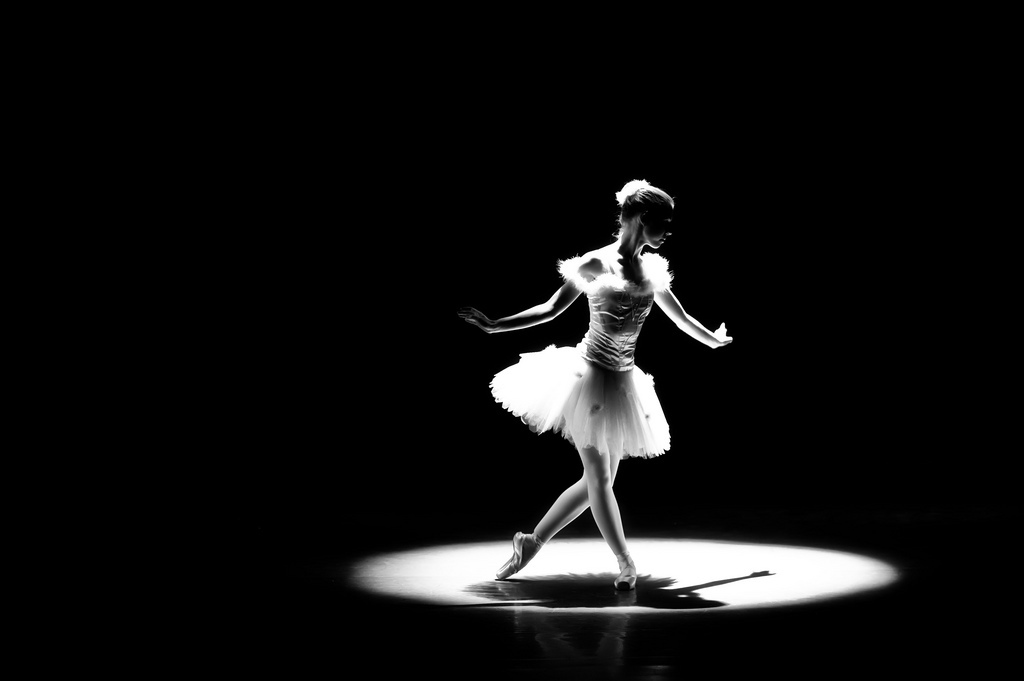
Early in life, I learned to view my body as a sort of prison. While other little girls spent time playing and living carefree young lives, I struggled my way through ballet class– attempting to forcefully train my body to be graceful, obedient, and beautiful. Through my journey from student to professional, no matter my efforts, no matter how low my weight, or expertly I executed choreography, I never felt it was enough.
At the root of it all, I felt that my body held me back. “If I’d only been born with narrower shoulders, higher arched feet, longer legs,” I dreamed, “I would be better and do betterMy life would somehow be easier”, I thought. My soul was that of an artist, choosing dance as the medium within which to come alive, but my very human body never seemed good enough to match the ambitions I held for my dance career.
Over time, I began to resent the body I was born with, feeling limited by the “hand I’d been dealt”. I realized that while I couldn’t control the body I was given at birth, I could control how I operated it– working harder, training longer, and being as skinny as possible in order to be the best dancer I could be.
Eyes firmly on the goal to curate my identity as professional ballerina, I adopted so many ways to control, shape, and demand from my body. I used this discipline to transcend and ignore my basic human needs for rest and food– in true “no pain, no gain” fashion.
These habits served me fairly well, or so I thought, until my first major injury at age 29 forced me to take some time away from the stage in order to heal.  Forced to truly partner with my body (instead of dominating and controlling) for the first time in my life, I began a continually unfolding journey of healing and awakening, coming back home to myself.
When I began to understand that my body was something to respect and honor– that I had limits and finite energy that had to be acknowledged—and began acting as such, I realized that my body was an extension of me, my soul made flesh. I realized that my one, greatest responsibility in life was caring for this body every day, because she is my home in this lifetime.
Embodying this realization meant no more excuses, no more blurred boundaries with others, no crappy, convenient, or emotionally-charged food choices. It was time to go beyond the surface level frustrations I held and tap into what really mattered most.
I realized essentially that to hate my body was to, in fact, hate myself. And when I realized just how much I had been unconsciously hating myself all those years, I was heart-broken. I resolved to return to myself– treating myself as a loved one each moment.  Creating love, peace, calm and strength from within, first.
Here are a few of the tools I used:

I studied my unique, individual body.

Not the body, but my body, learning which foods, relationships, activities and movement helped me to feel good vs. relying on mass (confusing) opinions about what worked and what didn’t. When I got to the roots of what my particular body wanted and needed to thrive, my relationship to food changed drastically, I started taking more time for myself and releasing relationships and things that no longer served me. Most importantly, I became more confident about my body and within my life.

I stopped torturing my body with exercise I hated and found movement I loved.

As a dancer, I was taught to “suck it up” and push through intense pain on a daily basis. This meant smiling beautifully– tutu and tiara in tow– regardless of whether my feet were bleeding in my pointe shoes, or my muscles ached and burned from exhaustion.  Ballet requires fierce determination, training, and skill.  Pushing is required. But so is listening to the body and acknowledging the body’s limitations. When I committed to doing things differently—with honor and respect for my body– I realized I seriously disliked most of the ways I’d been keeping myself in shape.  As I began to explore different types of movement that felt great to me, I created space to witness, in awe, all that my body was capable of. It took time for me to release these patterns of forcing and pushing, but come to find out, both my body and I do much better with a gentler approach.

I healed my relationship to food and healed my body in the process.  

Like many of my clients, I was constantly confused and frustrated in my relationship to food.  I never knew what to eat (or what not to eat) and I struggled with consistency and emotionally charged eating.  Unbeknownst to me at the time, I also suffered from a lifetime of food allergies that left me feeling bloated, ill and lethargic regularly.  By returning food to its rightful role in my life—as fuel, nourishment, and a source of healing instead of comfort, stress-relief, or a mindless sport—I began to witness my body change.  My digestion healed, my weight stabilized, my energy increased, and my skin became clear for the first time in my life. By eliminating the foods and eating habits that plagued me, I was able to focus more fully on what I wanted in life.  I finally felt healthy and strong and had the energy and vitality to do more than just constantly obsess over food.

I released obligations, relationships and things that no longer served me. 

Most women are chronic “over-givers”. Our time, energy, and nurturance often go toward everything and everyone else except ourselves.  Recognizing that I needed to make some serious changes in my life starting with my relationship to myself, I knew I had to make my own well-being a priority.  Not out of selfishness or laziness, but out of self-love and self-respect. I implemented stronger boundaries on my time, saying no more frequently and made downtime, relaxation and stress management necessary components of each day instead of occasional luxuries to be had when everything else was complete. Subsequently, I released those people, relationships, and commitments that no longer served me or left me feeling drained.  I made the activities and relationships I needed to feel incredible in my life mandatory priorities.

I transformed my inner dialogue.  

As a dancer, I thought I was happy and healthy because I was thin and active, but my inner world anything but.  I was uncomfortable in my skin and felt like something was missing from my life.  The more I studied holistic well-being, the more I realized that true health goes much deeper than yoga, quinoa and size 2 jeans. If I was cruel and cold to myself internally, no amount of green juice or Pilates would change that (and I love green juice and Pilates!). I had to change the way I spoke to and related to myself on a fundamental level in order for things to really shift. Once I began to treat myself like a loved one, I flourished in all areas of my life and became more consistent in my habits from a place of devotion vs. rigidity.

I started relating to my body as a “she” not an “it”.

When I began to see my body as a living, breathing, female animal with needs all her own– instead of a disobedient beast that held me back from what I really wanted– it became difficult for me to refer to my body as an inanimate object, an “it”.  If I could acknowledge my pets for their innate being-ness with pronouns like “he” or “she”, but not my body, there was a serious disconnect happening.  As I changed this one, simple way of referring to myself, I began to see that my body was truly my best friend, supporting and carrying me through each day like a loyal companion who deserved love, honor, and respect.
As my relationship to my body healed, I began to think of my lineage– my mother, my grandmother, and women and children of future generations. How would their lives be different if they were taught to honor and respect their bodies from the beginning? To feed themselves exquisite food as fuel vs. stuff themselves out of boredom, for comfort, or as a way to soothe painful emotions? If women came to love the bodies they call home—these miraculous creatures we’re entrusted with care of—what would that change in our world?
Our bodies are our windows to life. When we are overweight, sick, tired, overwhelmed, stressed, and downright abusive to ourselves, it seriously inhibits the way we show up in the world. Most women are taught that their bodies are flawed. They receive images in media, comments from others and other constant reminders of all the ways in which they don’t add up, but it’s time for us to rewrite this story starting with ourselves.
It is my deepest belief that when a woman loves the body she calls home, she embraces her power to create the life she was born to live. I am living proof of this as are the hundreds of women I’ve worked with in my Nutrition & Lifestyle Coaching practice.  I am consistently inspired and amazed when women take these lessons to heart and I’ve seen lives heal and change in major ways as a result of reconnecting to their amazing bodies.
I invite you to love the body you call home.

Sunday, 22 April 2018

8 Communication Barriers in Business

8 Communication Barriers in Business


Companies must develop a working environment that is conducive to open, trusting, caring relationships between people—an environment that welcomes new ideas and encourages constructive feedback; one in which management actively serves as a catalyst for nurturing and then disseminating new ideas. One of the functions of management is to recognize communication barriers so that the organization can avoid them. Discussed below are some of the most significant communication barriers to avoid.
Communication barrier: Rigid adherence to organizational charts. Organization charts in a company neither define relationships as they actually exist nor direct the lines of communication. If the organization doesn’t reside in the minds and hearts of the people, it doesn’t exist. No chart can fix that. An organization’s function is simple: to provide a framework, a format, a context in which people can effectively use resources to accomplish their goals. The problem is that organizational charts imply that communication should only flow vertically. The fact is communication must flow across organizational and functional units as well.
Communication barrier: Management isolation. Management should keep in mind that creating lavish executive offices, having administrative assistants construct what amounts to barbed-wire enclosures around those executive offices, establishing perquisites—the corner office, executive parking spaces, separate executive floors, private washrooms and dining rooms, limos, even flying first class when others sit in coach—loudly proclaim who is boss. These “perks” increase personal distance and ensure that people feel that their leaders are unapproachable.
Communication barrier: The development of caste systems. The caste system creates artificial barriers that inhibit communication. For example, does your organization encourage clear language or is jargon the norm? Are there opportunities for people at different levels and in different functional groups to spend time with one another, or is there socializing only along status lines?
Communication barrier: The existence of physical barriers. Distance poses another kind of problem in the workplace. People communicate most with those physically closest to them. Thomas Allen of MIT notes that “beyond a distance of 25 or 30 yards, personal interaction drops off markedly. That is why it is important for management to try to bring together as much as possible those who work together.”
Communication barrier: The ambiance surrounding meetings. The process of setting up a meeting and the nonverbal cues during a meeting often communicate as much as the content of the meeting itself. For example, how often are meetings held? Are people early or late for meetings? Is the boss late? What’s the layout of the room? Who gets invited? What’s on the agenda? How is the agenda prepared? How long does the average meeting last? How much time is allotted to each subject? Is the tone of the meeting formal or informal? How much dialogue is there?
Communication barrier: Consistency of words and actions. Are the actions of your organization consistent with its policies? Does management say they care about innovation, but promote those who don’t rock the boat? Do they say that they reward excellence, but give across-the-board raises? Do they say they reward creativity, but have a long-drawn-out approval process that frustrates anyone with a new idea?
Communication barrier: Political warfare. Some people hoard information for personal gain. They believe they increase their power when others are in the dark. Organizations must combat the idea that playing politics with information will bring personal gain. Organizations marked by politics, turf battles, and staff infighting lack adequate communication.
Communication barrier: Poor listening habits. When report cards are given out for how well we listen, very few of us would receive passing grades. Barriers to listening include assuming a subject is uninteresting and tuning out, focusing on the delivery rather than the content, reacting too quickly before the message is completed, picking up on emotional words and not hearing the rest of the message, listening only for facts rather than trying to absorb ideas, allowing yourself to be distracted, and avoiding listening to subjects that you don’t understand. Everyone must learn to overcome these barriers.
The bottom line is that there are four elements required to make communication thrive. First, every organization requires accessible, affordable, easy-to-use technology. Second, an open, honest work environment should be embraced. Third, people should be encouraged to break down the communication barriers that exist. Last, great leaders must communicate the guiding principles, beliefs, and values of the organization—this will rally everyone to a common cause. For just as the stars were used to navigate ships in the night, these guiding principles dictate what is important, how decisions are made, how people are rewarded, who gets promoted, what kind of person joins the organization, and how people communicate with one another.

Friday, 20 April 2018

The Year I Hit Rock Bottom

The Year I Hit Rock Bottom

hit rock bottom
“When in doubt, choose change.” – Lily Leung
It was the year everything changed. I gained over 30 pounds of fat. Crashed my first car. Got kicked out of college.
Growing up, I was always athletic. Losing weight was never a problem. That changed my first year of college. You’ve heard of the freshmen 15? Many college freshmen gain 15 pounds with less exercise, more junk food, more stress. I doubled that. I put on over 30 pounds and it was NOT muscle.
How did a kid who was tall and skinny his whole life suddenly have a pot belly? I stopped playing any sports. I ate pizza, subs, wings. I drank too much beer and pop. Up until then I never had to worry about gaining weight. The challenge I had was being too skinny. I just burned off anything I ate with plenty of sports and activity.

I Hit Rock Bottom

Not only did I put on over 30 pounds, I crashed my first car (an old 87 Chevy that was a gift from my Grandfather) and got kicked out of college. Quite the first year of college I had! Something had to change or else I was going to end up dead before I got close to graduating college.

Time for Changes

My dad was angry and disappointed, as you can expect. I promised him that I would do whatever it takes to get my life back on track. He agreed to help me get another car. I enrolled in community college and joined my first gym. Dad showed me some basics at the gym. I didn’t know what I was doing. There were no internet programs back then (hard to believe, I know). All I tried to do was show up three days a week, do some running and weight training.
It was far from perfect, but it was a start. Those 30 pounds started to burn off. I was feeling more optimistic about my future. I still had some bad habits to clean up. Smoking. Drinking. Staying out too late. Not sleeping enough. But it was a start. I had a long way to go before I would transform myself into the man I was capable of becoming. We all have to start somewhere. I didn’t know at the time, but this was a huge turning point in my life.

Learning Valuable Lessons

My freshmen year of college taught me valuable lessons:
  • I had to work much harder. In high school, I coasted by without doing much work. I could pass easily and get B’s with a little effort. This wouldn’t work in college or the “real world”.
  • If I drank too many beers I would sleep on a couch, instead of driving home. The risk was not worth it.
  • The body needs regular exercise and solid nutrition (I was still working on the diet part).
Like I said, I wasn’t perfect but I was improving. It would be a few more years until I quit smoking. I still drank too much. Sleep wasn’t a priority (I was young and thought I could get away with it). During this time I got my grades up, lost most of that freshmen 30+ and I proved to be more responsible. Here are what I consider to be the keys to my life-change:
  • The car crash I survived was a wake-up call. I walked away with only a concussion and staples in my head. I was grateful and learned my lesson.
  • I didn’t like the way I looked. There was a photo of me shirtless on vacation. I was surprised to see how much my belly stuck out.
  • The influence of my dad. His disappointment was a big factor in my desire to change. I wanted to prove that I could change and make him proud.
How did I go about changing my habits? I took simple steps:
  • Paying for a gym membership/ scheduling 3 workouts per week.
  • Picking up a second job and taking on a new car loan- added responsibility.
  • Drinking less frequently- from almost-daily to 1-2 days per week.
  • No driving after having any drinks at all. Call for a ride, sleep on a couch.

From Dark Days to Hope

From the outside, you may have thought I was just a college kid having fun. It’s normal to screw around and not know what you want to do with your life. But honestly, I was not happy. I had no interest in college, all I wanted to do was party and I did not care about my health.
The combination of totaling my car, gaining over 30 pounds of fat, and getting booted out of school was the wake-up call that I needed. Something had to change. It started with taking a look in the mirror. I still didn’t know my life purpose, but I was taking steps to find out. I had a new car, new school, and new body. There was hope.
Even if there was no clear path, I felt like I was making changes for the better. Often, that’s all you can do. Make changes to improve yourself. Look in the mirror and realize you can be better. Make small changes that will add up over time. If you find yourself at rock bottom, remember you can change. Start with yourself. If you don’t like what you see, then you know it’s time to shift your course. Sometimes we need a smack to the head to realize we need to alter our habits. I sure did!